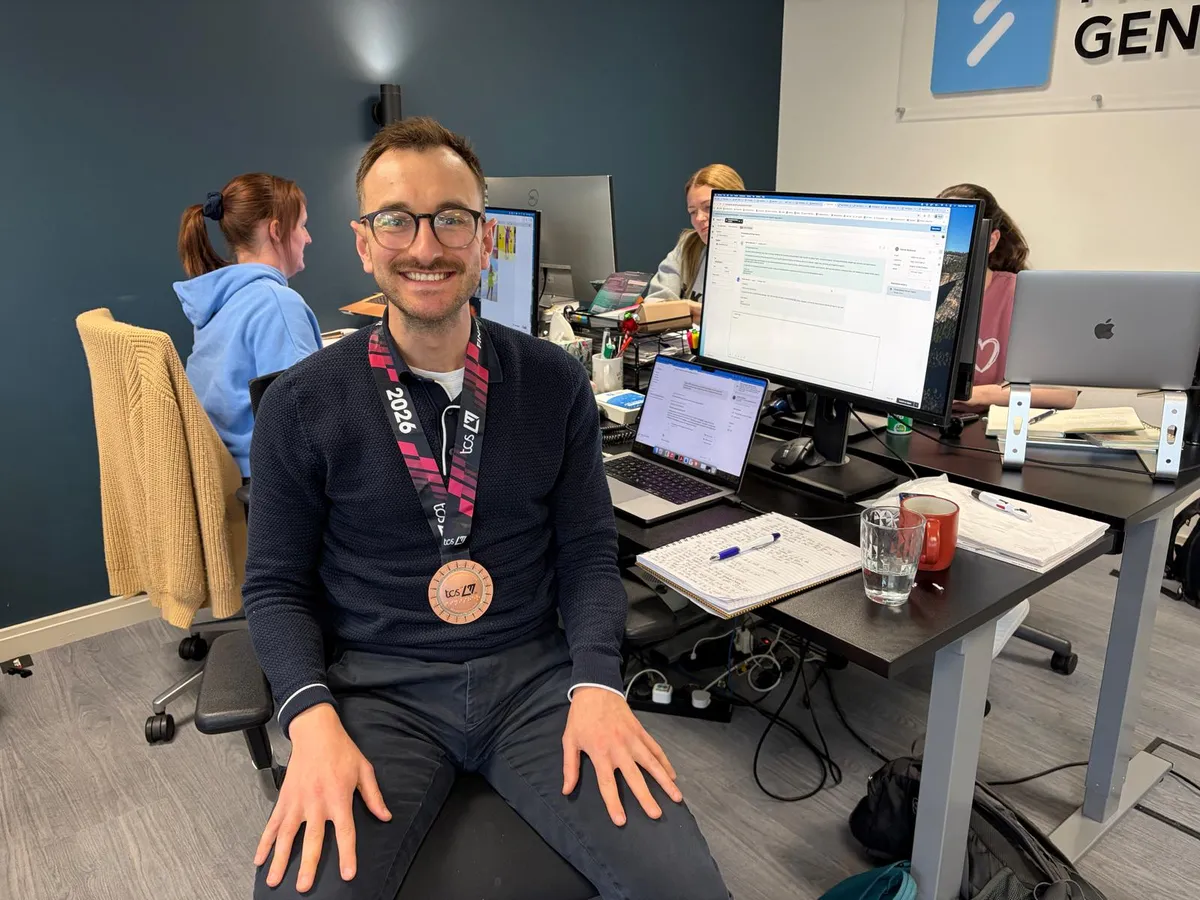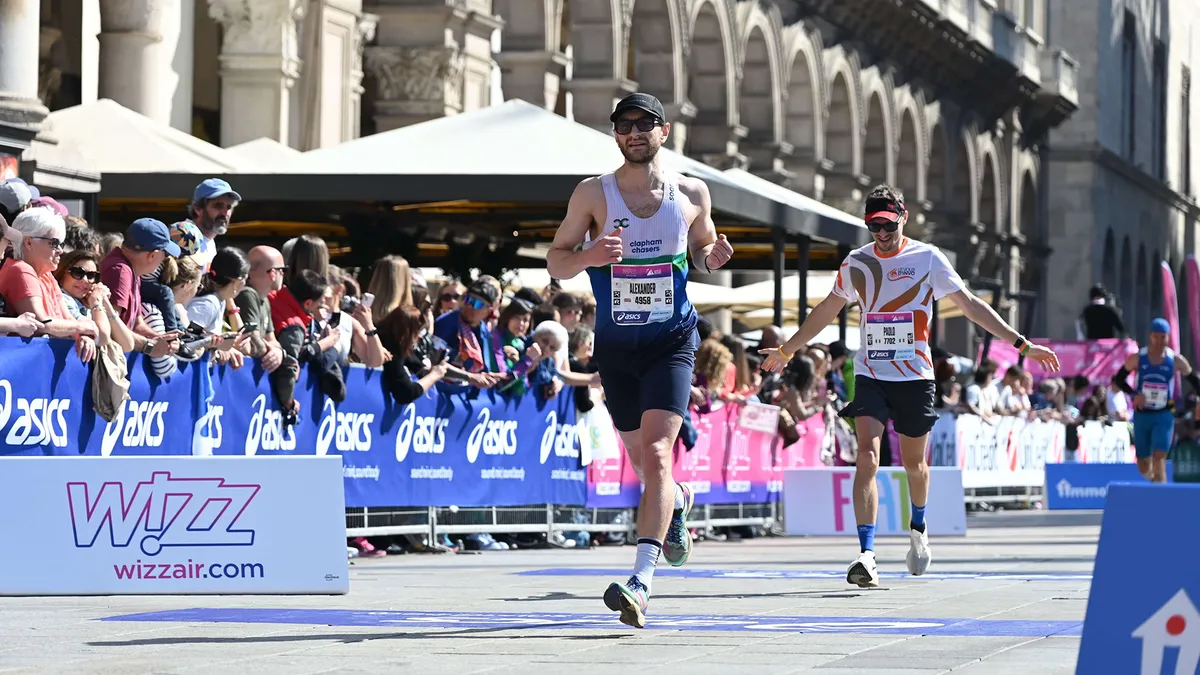
With the World of Triathlon live event coming up this weekend, we sat down with team member Alex to hear about his triathlon experience and how his FitnessGenes results have helped his performance.
Q: When did you first get into triathlons? How many have you finished, and what was your first race experience like?
The first triathlon I completed was the Brackley Sprint back in 2018, and I remember it so distinctly. I specifically remember how I felt in the changing room before heading out to the pool, how nervous I was before the race. I actually revisit that memory before every race now. When I’m apprehensive about how it’s going to go, I remember that the first race was fine, so all the others will be too.
Since then, I’ve finished several major events, including 70.3 races in Slovenia, Switzerland, Sweden and the UK. I have also competed in the British Standard Distance Championships in Leeds and Sunderland and other standard distance events in London and Windsor. My current personal bests stand at 2:15 for a standard distance and 5:01 for a 70.3. I was hoping to get under 5 for that one, maybe next time!
Q: What aspects of your triathlon journey were you struggling with? Which of your results did you find the most useful for your training?
Like many endurance athletes, I come from a team sport background. The move from rugby to triathlon was motivated by a need to better manage my weekly schedule with shifting priorities in my late twenties.
However, this also meant a steep learning curve of new training methods and terminologies if I was going to make progress in the sport. I can still distinctly remember a friend educating me on the concept of interval training and how to set them up on my Garmin.
Fortunately, through FitnessGenes, I already had access to a wide range of genetic reports relating to training structure and response, recovery, sleep, nutrition and more. Some of the key reports that helped are:
Caffeine and Endurance Performance
I discovered that I am a fast metaboliser of caffeine. This means my body breaks it down quickly and can use it to benefit my performance. Now I know that if I have 100 mg of caffeine, 30 minutes before I start training or competition, it can really help with my energy levels and performance. I mostly have caffeine gels, but I do sometimes just have a coffee, as a mug is roughly around 95 mg, so it works well too. I’ve noticed a massive difference; where I’d usually start to feel that mid-race "dip," the caffeine picks me right back up and lets me push harder for longer.
Musculoskeletal Soft Tissue Injury Risk
For years, I have struggled with my Achilles tendons. When my results showed a high genetic risk for soft tissue injuries, it all made sense. I began prioritising strength and conditioning at least twice a week, focusing on eccentric exercises like heel drops and calf raises. It’s made me feel so much more robust; the pain has settled down, and I actually have the confidence to put power through my feet again.
Nitric Oxide and Blood Flow (NOS3)
I also discovered I have reduced levels of NOS3, which impacts blood flow and blood pressure. Following my recommendations, I started taking beetroot shots with most of my meals back in 2019 to boost my nitrates. It was an easy dietary change, backed by an abundance of research, that has helped my body handle the cardiovascular load of training and competing.
Muscle Damage (TNF-α)
My muscle damage report was a “high priority” result for me. I have increased levels of TNF-α, which promotes inflammation and elevates my risk of exercise-induced muscle damage. This led me to look at my nutrition and recovery. I make sure to fully stretch after each training session and competition, including using a foam roller to really get into the muscles. I now prioritise protein intake, making sure to get at least 30 g per meal. I’ll often have eggs and yoghurt for breakfast (separately!), lean meats such as chicken and turkey for lunch and dinner, and I’ll snack on nuts to up my protein intake. Another easy addition to my diet had been taking curcumin and piperine supplements to help lower my inflammation. Focusing on my recovery has been just as important as training effectively, which means I can push myself when I need to.
Q: What’s next for you?
I have recently shifted my focus towards marathon running. I earned a Good For Age qualifying spot in Warsaw 2025, so I’ll be making my London Marathon debut this year. Preparation is going well - I recently clocked a 74-minute half-marathon in Cambridge, so I’m excited to see what I can do on the streets of London.
We wish Alex the best of luck at the London Marathon!
Post-race Reflection
Q: How did the London Marathon go?
It was a race I'll remember for a long time - though perhaps not entirely for the reasons I'd hoped going in. A late training block injury threatened to derail things completely, and there were moments where I wasn't sure I'd make the start line in a shape worth racing. In the end, I ran 2:48 (just one minute off my current PB), so given the circumstances, I left feeling grateful that the injury didn't take more away from the day than it did.
Fuelling was one of the real positives. Everything I'd learned about my caffeine metabolism and managing inflammation through nutrition really came together on race day. I felt well-fuelled throughout and didn't hit the kind of wall I might have done in earlier races. That felt like a meaningful step forward.
But if I'm honest, the training block itself was where I learned the most. The injury forced me to think more carefully about load management and recovery in ways I hadn't before - lessons I'll carry into every build from here on.
One particular highlight was having FitnessGenes colleagues Carrie and Olatz cheering me on at a few different points around the course. There's something about seeing familiar faces mid-race, especially at the points where you need a lift, that really helps get you through it.