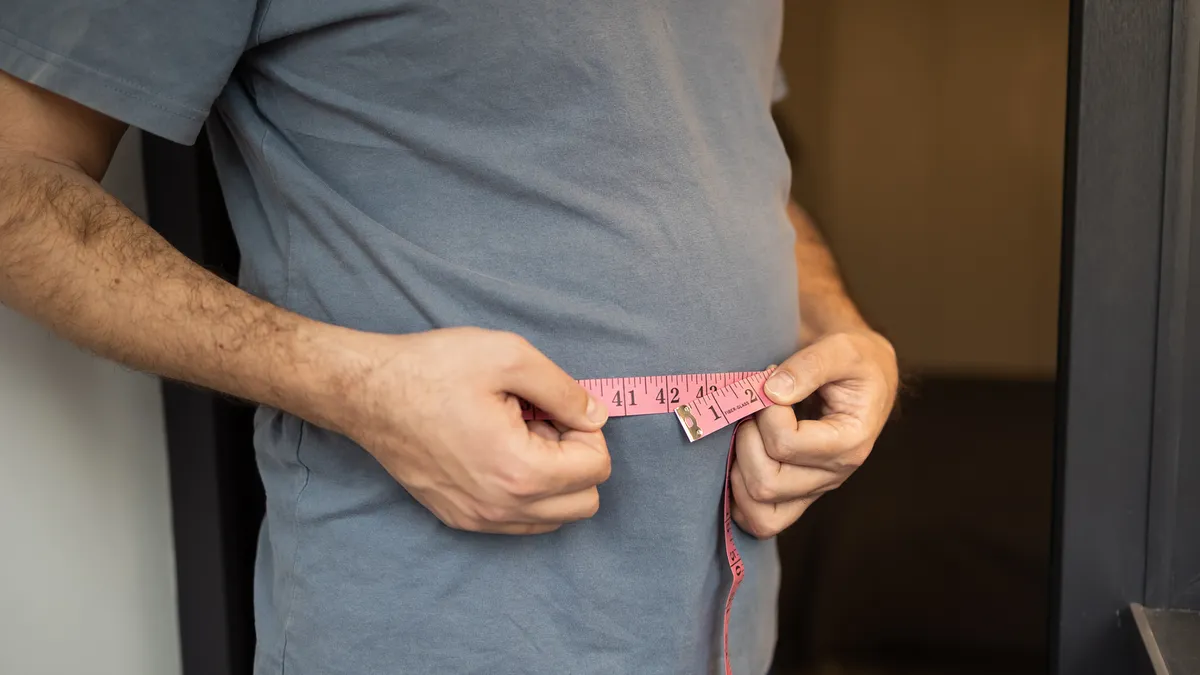
Your body stores fat in two distinct ways: subcutaneous fat sits just beneath the skin and makes up around 90% of your total body fat, while visceral fat wraps around your internal organs deep inside the abdominal cavity. Both types serve a purpose, but too much of either - visceral fat in particular - is linked to serious health risks, including cardiovascular disease, insulin resistance, and type 2 diabetes.
If you're already using blood testing to track your health markers, knowing your genetic input adds a crucial layer of context to what those results actually mean.
What is visceral fat, and why does it matter?
Visceral fat is the fat stored deep within the abdominal cavity, lining and surrounding your internal organs, including the liver, pancreas, and intestines. Having some visceral fat is entirely normal - it acts as a physical cushion, protecting organs from impact, and it's readily available for the body to use as an energy source.
Problems arise when visceral fat accumulates beyond its healthy range. Because it sits so close to vital organs and major blood vessels, excess visceral fat is metabolically active in ways that are harmful. It can release inflammatory compounds and fatty acids directly into the liver, raising the risk of cardiovascular disease, type 2 diabetes, and metabolic syndrome. Even individuals with a healthy body weight can carry too much visceral fat, which is why scale weight alone is a poor indicator of metabolic health.
What is subcutaneous fat, and is it a health concern?
Subcutaneous fat is the fat found just beneath the skin - it's the layer you can pinch around your belly, hips, thighs, and buttocks. It accounts for roughly 90% of the body's total fat stores and plays an important role in insulating the body, cushioning muscles and bones, and storing energy for longer-term use.
Unlike visceral fat, subcutaneous fat is considered less immediately dangerous in moderate amounts. However, excessive subcutaneous fat is still associated with increased risk of heart disease, stroke, and type 2 diabetes. It also tends to be more stubborn to lose - subcutaneous fat is generally more resistant to lifestyle intervention than visceral fat, which is why fat loss can be a slow process even when you're doing everything right.
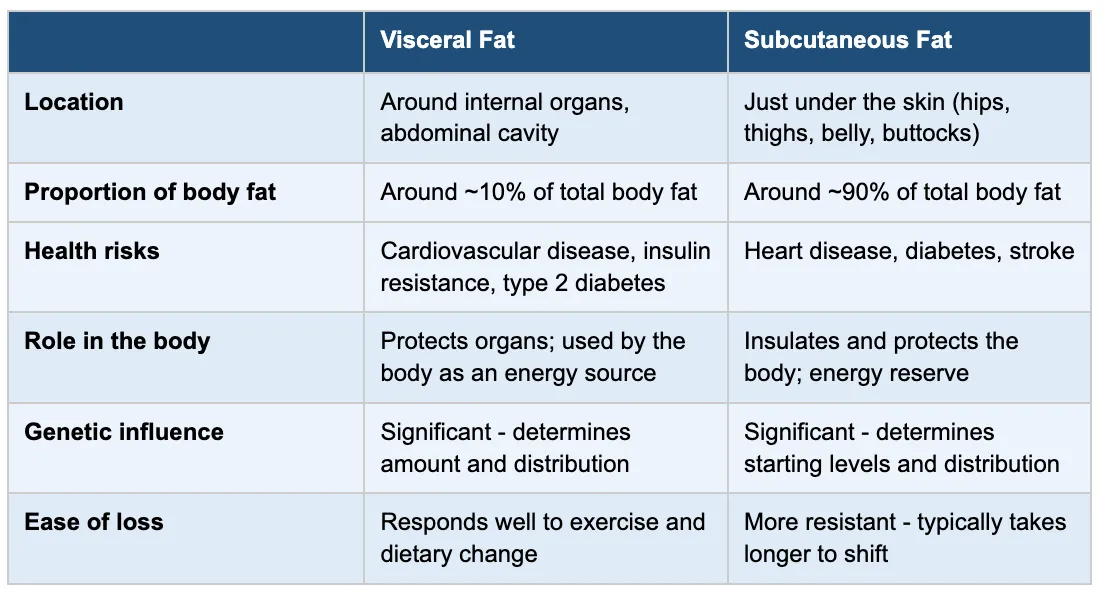
At a glance: visceral vs subcutaneous fat
How does genetics influence where you store fat?
Genetics plays a significant role in determining both the amount of fat your body stores and where it tends to accumulate. This is why some people naturally carry more weight around the abdomen - a pattern associated with higher visceral fat - while others store it predominantly in the hips and thighs. These differences in body shape are substantially inherited.
Your genetic profile influences not only how much visceral fat you're predisposed to develop, but also how efficiently your body uses it for energy. Research into gene variants related to fat metabolism and body composition is an active area - and it's precisely why two people can follow identical diets and exercise programmes and see very different results in terms of where and how quickly they lose fat.
A FitnessGenes DNA analysis examines variants of the ASHG, UCP2 and LEPR genes that influence fat distribution and metabolic response, helping to explain individual differences in body composition and providing a more personalised starting point for making targeted lifestyle changes.
Finally, we also look at an extensive range of traits that help you understand body fat gain and eating behaviour including those linked to FTO and MC4R. These impact calorie intake, which ultimately fuels the metabolic conditions that can fuel visceral fat growth.
What environmental factors drive visceral fat accumulation?
While genetics sets the baseline, your lifestyle determines how much visceral fat you develop over time. Diets high in refined carbohydrates, sugar, and saturated fat are particularly associated with increased visceral fat accumulation. Physical inactivity is also a major driver. The body generates visceral fat as an energy store, but if activity levels are low, that fat is never converted back into fuel.
Chronic sleep deprivation is another underappreciated factor. Poor sleep raises cortisol, a stress hormone, which directly promotes visceral fat storage and makes it harder for the body to break that fat down. Similarly, consistently elevated stress levels sustain high cortisol and can accelerate visceral fat accumulation even in otherwise healthy individuals.
Alcohol intake is also worth noting. Regular or heavy alcohol consumption is directly linked to increased visceral fat, particularly around the abdomen.
Is visceral fat easier to lose than subcutaneous fat?
Visceral fat is generally more responsive to lifestyle intervention than subcutaneous fat. Because the body uses it preferentially as an energy source, visceral fat tends to decrease relatively quickly with regular aerobic exercise, dietary changes, and improved sleep quality. Many people notice a reduction in waist circumference before they see visible changes elsewhere.
Subcutaneous fat, by contrast, is more metabolically inert and tends to persist longer. Targeted exercises for specific areas (often called 'spot reduction') do not work - fat loss from subcutaneous stores is systemic, meaning it happens across the body over time rather than from one isolated region. Consistency over months is what shifts subcutaneous fat.
The most effective approach for both fat types combines regular exercise (both resistance training and cardiovascular work), a balanced diet that limits ultra-processed foods and excess sugar, adequate sleep (7-9 hours per night), stress management, and reduced alcohol intake.
Frequently Asked Questions
Can I measure how much visceral fat I have?
Visceral fat cannot be measured by pinching or by a standard body fat scale. The most accurate measures are a DEXA scan or an MRI. However, waist circumference is a practical proxy - a waist measurement above 88cm (women) or 102cm (men) is generally associated with elevated visceral fat and increased cardiometabolic risk.
Does blood testing reveal visceral fat levels?
Not directly - no standard blood test measures visceral fat. However, blood markers such as fasting insulin, triglycerides, HDL cholesterol, and HbA1c are closely associated with visceral fat levels and metabolic health. If you're already tracking these through services like Thriva or Medichecks, deteriorating trends in these markers may point to increasing visceral fat even before visible changes occur.
Why do I store fat on my hips and thighs rather than my belly?
Fat distribution patterns are largely genetic. Oestrogen tends to promote fat storage in the hips, buttocks, and thighs - which is why pre-menopausal women often store more subcutaneous fat in these areas. Testosterone is associated with more abdominal storage. After menopause, the shift in hormonal balance often leads to increased abdominal fat accumulation in women.
Your DNA influences both your hormonal baseline and how sensitively your cells respond to these signals. Variants in genes such as FKBP5 and NR3C1, which affect cortisol sensitivity, and ADIPOQ, which influences fat metabolism and abdominal adiposity, can compound or offset these hormonal tendencies - meaning two people with similar hormone levels may still carry fat in different places depending on their genetic profile.
Does visceral fat cause inflammation?
Yes. Visceral fat tissue releases pro-inflammatory cytokines and free fatty acids into the portal circulation, which feeds directly into the liver. Excess visceral fat is strongly associated with systemic low-grade inflammation - a key mechanism linking abdominal obesity to cardiovascular disease, insulin resistance, and certain cancers.
Can you have too little subcutaneous fat?
Yes. Very low levels of subcutaneous fat - a condition known as lipodystrophy - are associated with serious metabolic problems, including insulin resistance and dyslipidaemia, even without excess visceral fat. A healthy level of subcutaneous fat is important for normal hormonal function, insulation, and immune health.
What exercises are best for reducing visceral fat?
Aerobic exercise (particularly moderate-to-vigorous intensity cardio such as running, cycling, rowing, or swimming) is consistently shown to reduce visceral fat most effectively. Resistance training supports fat loss by increasing metabolic rate. High-intensity interval training (HIIT) is also well-evidenced for reducing visceral fat, particularly when combined with dietary changes. The most important factor is consistency over time.
Does alcohol increase visceral fat specifically?
Yes. Alcohol is preferentially metabolised before fat, effectively pausing fat oxidation while alcohol is present. Regular drinking is associated with increased abdominal fat storage, and heavy intake correlates strongly with elevated visceral fat levels. Reducing alcohol is one of the more impactful lifestyle changes for reducing visceral fat accumulation.
References
Després JP, Lemieux I. (2006). Abdominal obesity and metabolic syndrome. Nature, 444(7121), 881-887.
Fox CS, et al. (2007). Abdominal visceral and subcutaneous adipose tissue compartments. Circulation, 116(1), 39-48.
Loos RJF, Ruchat S, Rankinen T, et al. (2007). Adiponectin and adiponectin receptor gene variants in relation to resting metabolic rate, respiratory quotient, and adiposity-related phenotypes in the Quebec Family Study. Am J Clin Nutr. 85(1), 26-34.
Tchernof A, Després JP. (2013). Pathophysiology of human visceral obesity: an update. Physiological Reviews, 93(1), 359-404.
Shen W, et al. (2009). Adipose tissue quantification by imaging methods: a proposed classification. Obesity Research, 11(1), 5-16.
Wajchenberg BL. (2000). Subcutaneous and visceral adipose tissue: their relation to the metabolic syndrome. Endocrine Reviews, 21(6), 697-738.
Ross R, et al. (2020). Waist circumference as a vital sign in clinical practice: a Consensus Statement from the IAS and ICCR Working Group on Visceral Obesity. Nature Reviews Endocrinology, 16(3), 177-189.