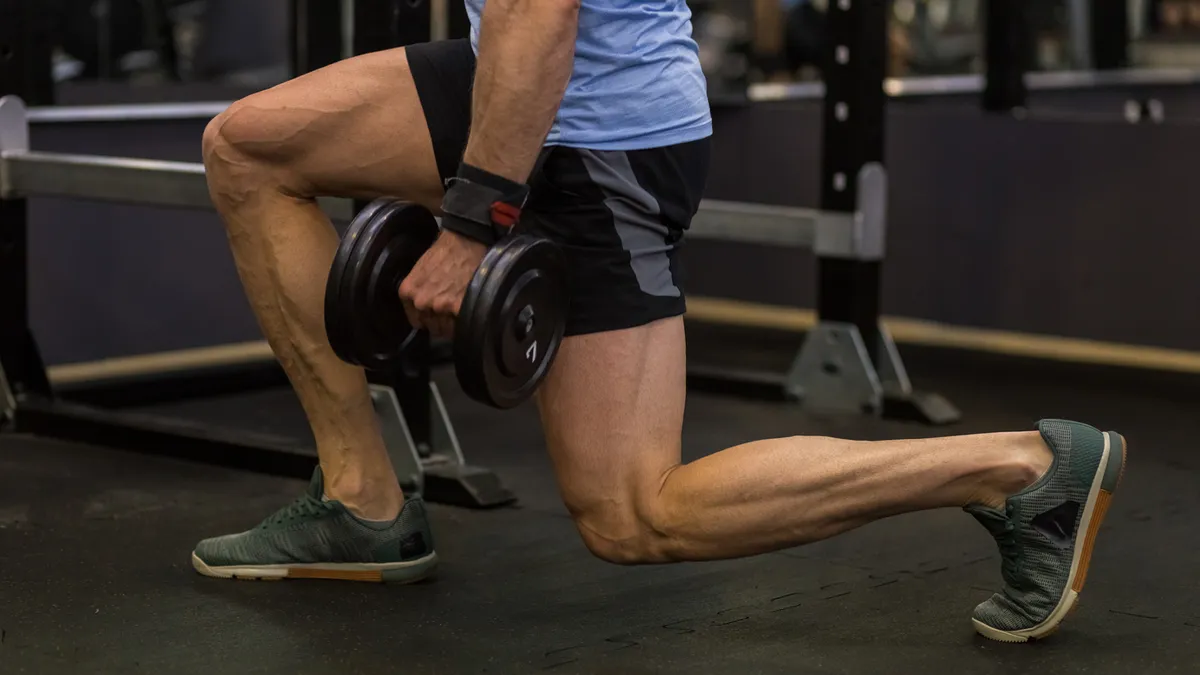
One of the questions I am asked most frequently by athletes, coaches, and clients is whether unilateral or bilateral training is superior. It is a topic that generates a surprising amount of debate, and depending on who you ask, you may hear very different opinions.
Some coaches argue that unilateral exercises are more functional because most sporting movements occur one leg at a time. Others believe that bilateral exercises are the foundation of strength development and should therefore receive the majority of training attention.
The reality is that both approaches have clear advantages, and the most effective training programmes rarely rely exclusively on one or the other.
Understanding when and why to use each method can help you maximise performance, reduce injury risk, and improve long-term development.
What Is the Difference?
Bilateral exercises involve both limbs working simultaneously. Examples include squats, deadlifts, leg presses, Olympic lifts, and traditional bench pressing.
Unilateral exercises involve one limb working independently. Common examples include Bulgarian split squats, step-ups, single-leg Romanian deadlifts, lunges, and single-arm pressing variations.
At first glance, the distinction seems simple. However, the physiological demands and training adaptations can differ substantially.
Why Bilateral Training Remains the Foundation
If the goal is to develop maximal strength, bilateral exercises remain difficult to replace.
Because both limbs contribute simultaneously, athletes can typically handle significantly greater external loads. This creates a powerful stimulus for muscle hypertrophy, neural adaptation, connective tissue development, and bone loading.
Heavy bilateral exercises also allow you to expose the musculoskeletal system to high levels of force production. From a performance perspective, maximal force production remains one of the most important physical qualities underpinning sprinting, jumping, change of direction, and overall athletic performance.
Research from Wisløff and colleagues has demonstrated strong relationships between maximal strength and sprint performance in athletes. Similarly, strength and conditioning research consistently shows that increasing force-producing capacity often improves numerous performance variables indirectly.
For this reason, bilateral exercises such as squats and deadlifts continue to form the backbone of many successful athletic development programmes.
The Unique Advantages of Unilateral Training
While bilateral exercises excel at developing maximal force, unilateral exercises offer benefits that are often difficult to achieve through bilateral work alone.
Most sporting actions occur primarily on one leg. Sprinting, accelerating, decelerating, changing direction, kicking, and landing frequently require force production while the body is supported by a single limb.
Unilateral exercises challenge balance, coordination, joint stability, and neuromuscular control to a much greater extent than traditional bilateral movements.
They also provide valuable information regarding side-to-side differences. In many individuals, asymmetries develop over time due to sport-specific demands, injury history, or movement habits. Unilateral training allows coaches and clinicians to identify and address these imbalances before they become problematic.
This does not necessarily mean that asymmetries should be eliminated entirely. Some degree of asymmetry is normal in many sports. However, large strength discrepancies may influence movement quality and potentially contribute to injury risk.
Understanding the Bilateral Deficit
One fascinating concept within strength training research is the bilateral deficit.
Researchers have observed that the combined force produced by both limbs working together is sometimes lower than the sum of each limb working independently. In other words, if you produce 500 N with the right leg and 500 N with the left leg separately, the total force produced when both legs work together may be slightly less than 1000 N.
The exact mechanisms are still debated, but neural factors appear to play a significant role. Interhemispheric inhibition and differences in motor unit recruitment strategies may partially explain this phenomenon.
While the bilateral deficit is interesting scientifically, its practical implications are often overstated. The body adapts specifically to the demands imposed upon it. Those who train predominantly bilaterally become highly efficient at producing force bilaterally, while those who train predominantly unilaterally become more efficient at unilateral force production.
The important message is not that one method is superior, but rather that training adaptations tend to be highly specific.
Rehabilitation and the Cross-Education Effect
One area where unilateral training becomes particularly valuable is rehabilitation.
Following injury or surgery, athletes frequently experience significant strength loss in the affected limb. Traditionally, rehabilitation focused primarily on restoring strength directly within the injured side. However, modern research has highlighted an interesting phenomenon known as the cross-education effect.
Studies by Munn, Carroll, and colleagues have shown that training one limb can increase strength in the contralateral, untrained limb. These improvements appear to occur primarily through neural adaptations rather than changes in muscle size.
From a clinical perspective, this is extremely valuable.
Imagine an individual recovering from ACL reconstruction who cannot yet load the surgical limb aggressively. Continued strength training of the healthy limb may help preserve neural function and reduce overall strength losses in the injured side. While this does not replace direct rehabilitation, it can be a valuable supplementary strategy during early recovery.
This is one of the reasons unilateral training frequently occupies an important role in both rehabilitation and return-to-play programmes.
Which Approach Produces Better Athletic Performance?
The honest answer is that it depends on the goal.
Research comparing unilateral and bilateral resistance training generally demonstrates a principle known as specificity.
Individuals tend to improve most in the tasks they train directly.
Unilateral training often transfers effectively to unilateral performance tasks, such as single-leg jumps, cutting actions, and certain change-of-direction activities.
Bilateral training typically produces larger improvements in maximal bilateral strength measures.
For most individuals, neither approach should be viewed as a replacement for the other.
A football player may benefit from heavy bilateral squats to improve maximal force production while simultaneously using unilateral exercises to address asymmetries and improve single-leg stability. A basketball player may use bilateral exercises to develop overall power while relying on unilateral movements to enhance landing mechanics and movement control.
The best programmes are rarely built around either-or thinking.
Practical Takeaways
In my experience, individuals achieve the best outcomes when unilateral and bilateral exercises are viewed as complementary tools rather than competing philosophies.
Bilateral training provides an efficient foundation for developing maximal strength, force production, muscle mass, and bone health.
Unilateral training contributes additional benefits through enhanced stability, coordination, limb-specific strength development, asymmetry management, and rehabilitation applications.
The question should not be whether unilateral training is better than bilateral training.
A more useful question is:
How can both be integrated to maximise performance, health, and long-term athletic development?
For most people, the answer is simple: use both.
Selected References
Behm DG, Alizadeh S, Daneshjoo A, et al. (2021). Effectiveness of unilateral and bilateral resistance training for athletic performance.
Munn J, Herbert RD, Gandevia SC. (2004). Contralateral effects of unilateral resistance training: A meta-analysis.
Carroll TJ, Herbert RD, Munn J, Lee M, Gandevia SC. (2006). Contralateral effects of unilateral strength training.
Hubal MJ, Gordish-Dressman H, Thompson PD, et al. (2005). Variability in muscle size and strength gain after unilateral resistance training.
Wisløff U, Castagna C, Helgerud J, Jones R, Hoff J. (2004). Strong correlation of maximal squat strength with sprint performance and vertical jump height in elite soccer players.