
One of the most common inherited conditions in humans, affecting an estimated 1 in 200 to 1 in 500 people worldwide, and one of the most under-diagnosed. This guide explains why genetics comes first, what an LDLR or APOB result means, and how to turn it into a useful conversation with your doctor.
Genetics comes first. Familial hypercholesterolaemia raises LDL cholesterol from birth, yet usually causes no symptoms until heart disease develops. A genetic test can identify the risk decades earlier, while it is still highly modifiable.
Why start with a genetic test
Familial hypercholesterolaemia (FH) is silent. Many people learn of it only after a heart attack in themselves or a relative, often before the age of 60. A genetic result reverses that sequence: it identifies risk before damage accumulates, directs the right blood tests, and alerts family members who may share the same variant.
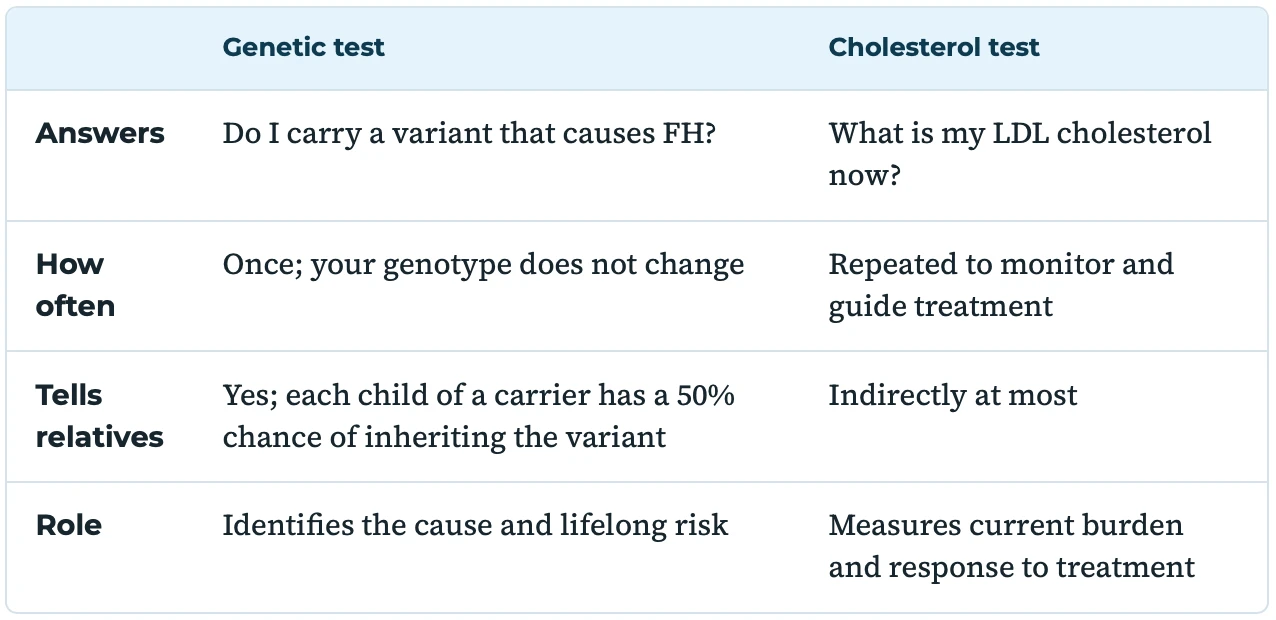
If a cholesterol test shows high LDL, why test genetics at all?
A high reading alone does not distinguish FH from raised cholesterol caused by diet or lifestyle. Carrying an FH variant indicates lifelong exposure to high LDL cholesterol from birth, which carries substantially greater cardiovascular risk at any given reading. It also typically warrants earlier and more intensive treatment, and testing of relatives.
Why does a genetic result matter for my family?
FH is inherited in an autosomal dominant pattern, so a single copy of a variant is sufficient to cause the condition. Parents, siblings and children each have a 50% chance of sharing it. Identifying FH in one person allows relatives, including children, to be assessed early.
Is a genetic result a diagnosis?
No. It is one component of assessment. Clinicians diagnose FH using established criteria that combine cholesterol levels, family history, physical signs and, where available, genetic results.
What your result means
FH is most often caused by variants in the LDLR gene (60–80% of cases) or the APOB gene (5–10%), with a smaller number in PCSK9. More than 2,000 causative variants are known. The FitnessGenes analysis examines 21 common LDLR variants and one APOB variant (rs5742904).
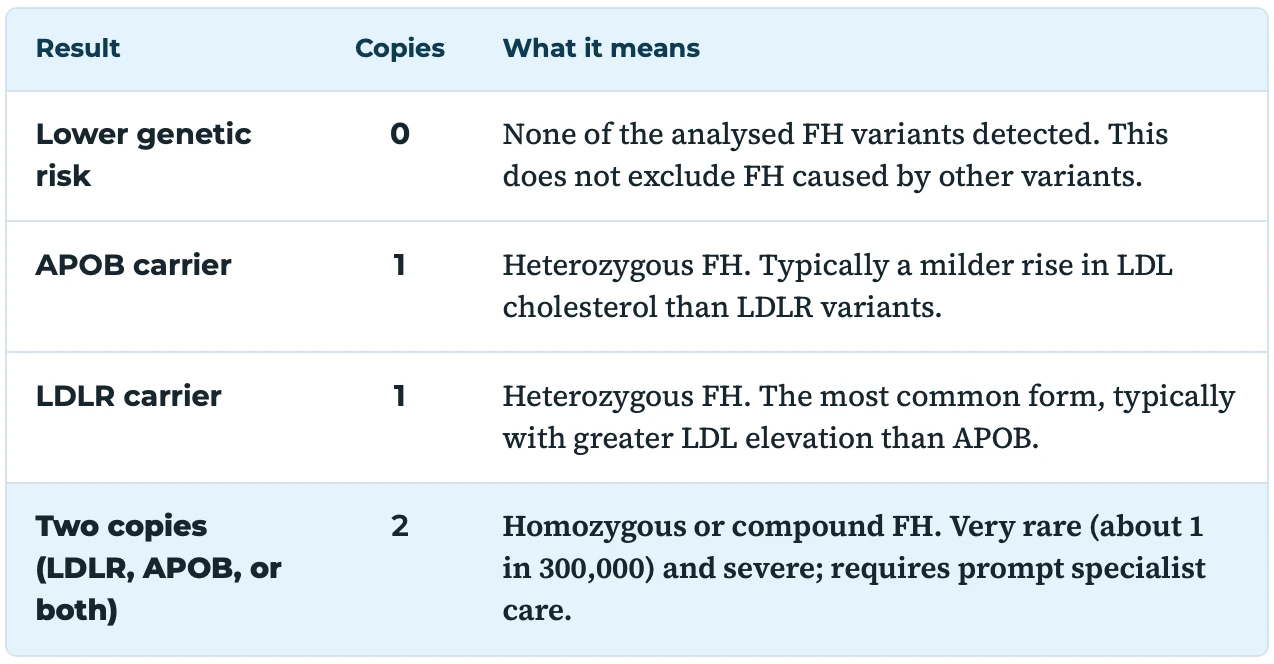
Does a negative result rule out FH?
No. The analysis covers a small proportion of the known variants. If your LDL cholesterol is raised, or a close relative had early heart disease, clinical assessment is still warranted.
What does it mean if other rare variants may affect my result?
Some results note additional rare variants that may reduce the accuracy of the analysis. In this case the result should be treated with caution and confirmed through clinical assessment, which may include diagnostic genetic testing.
How common is the APOB variant?
The APOB variant rs5742904 is carried by roughly 0.1% of the global population, though frequency varies by ancestry. In one study, over 12% of the Old Order Amish community carried it.
What if I carry two copies?
Homozygous FH causes extremely high LDL cholesterol from childhood, often above 10 mmol/L, and a high risk of cardiovascular disease early in life. It requires specialist lipid care. If you receive this result, please contact your doctor without delay.
About the condition
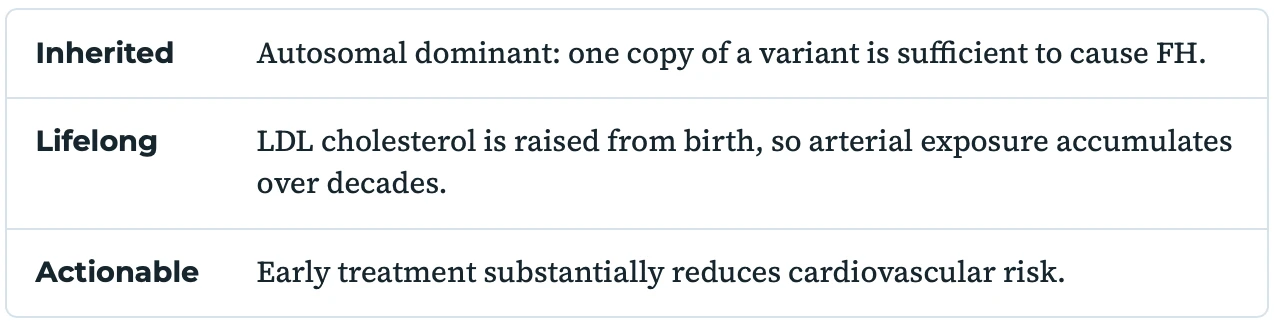
What is familial hypercholesterolaemia?
FH is an inherited condition in which the liver cannot clear LDL cholesterol from the bloodstream effectively. LDL cholesterol therefore remains markedly raised from birth, accelerating the build-up of plaque in the arteries and increasing the risk of coronary heart disease.
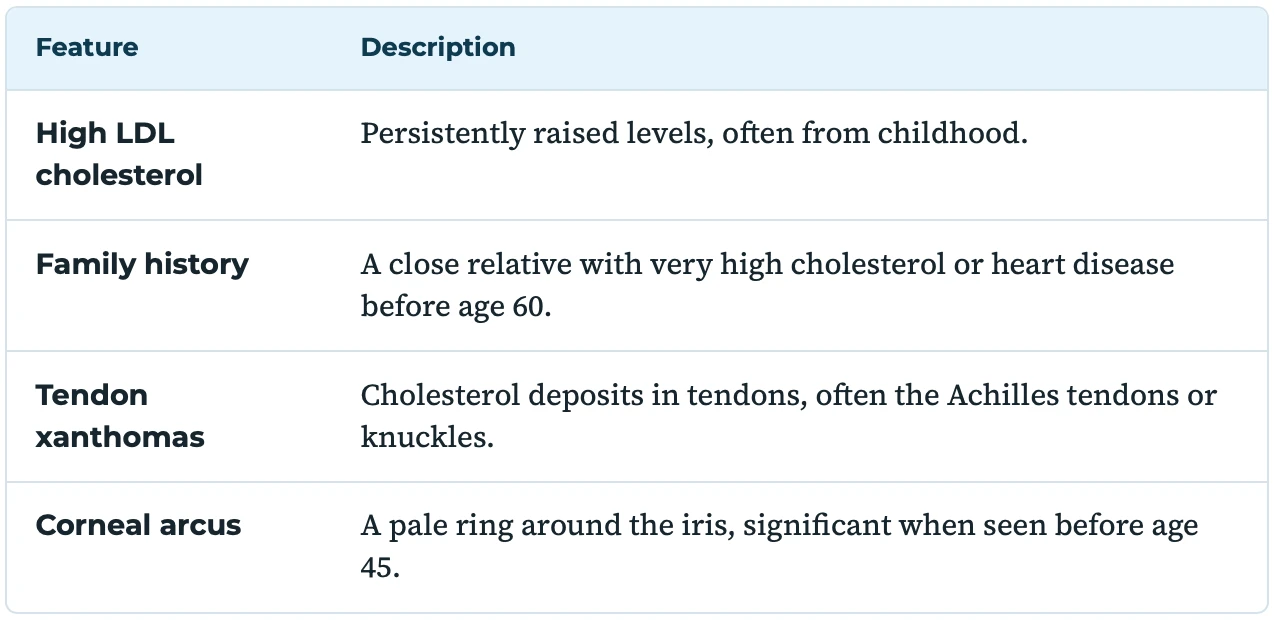
What are the signs?
Most people have no symptoms. Clinicians look for the following features:
Does lifestyle still matter if the cause is genetic?
Yes. Diet, physical activity, weight and smoking all influence LDL cholesterol and cardiovascular risk. For carriers, each rise in LDL cholesterol carries a greater increase in risk than for non-carriers, so lifestyle measures matter more, not less. They are usually combined with medication rather than replacing it.
LDL cholesterol and your risk
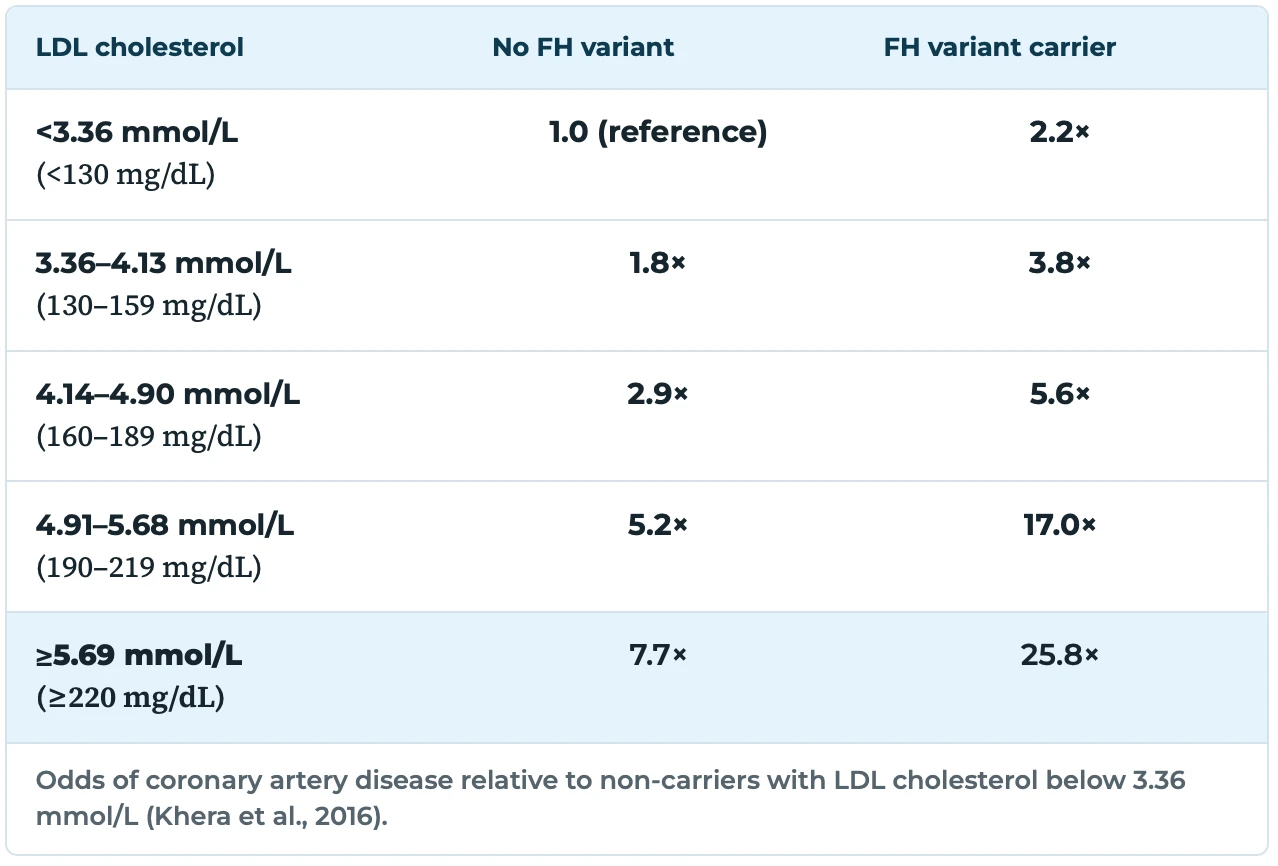
Risk depends on both genotype and current LDL cholesterol. In a large 2016 study, carrying an FH variant multiplied risk at every LDL level.
Tests and next steps
Which blood test should I ask for?
A full lipid profile: total cholesterol, LDL cholesterol, HDL cholesterol and triglycerides. Your clinician will interpret the results alongside your family history and any physical signs, and may refer you to a lipid specialist.
What should I say to my doctor?
The following wording may be useful:
"A genetic test suggests I may carry a variant associated with familial hypercholesterolaemia. Could I have a full lipid profile, and could the numerical values be provided rather than an indication of 'normal'?"
Mention any family history of very high cholesterol, heart attack, stroke or sudden cardiac death, particularly before age 60.
How is FH treated?
Treatment usually combines lifestyle measures with cholesterol-lowering medication, most commonly statins. Additional medicines are available where further lowering is needed. Treatment is prescribed and monitored by your clinician.
Should my children be tested?
Because FH raises cholesterol from birth, early identification in children allows timely management. Discuss testing of children and other relatives with your doctor, who may arrange family (cascade) testing.
References
- Defesche JC, et al. Familial hypercholesterolaemia. Nat Rev Dis Primers. 2017;3:17093.
- Beheshti SO, et al. Worldwide prevalence of familial hypercholesterolemia: meta-analyses of 11 million subjects. J Am Coll Cardiol. 2020;75(20):2553-2566.
- Khera AV, et al. Diagnostic yield and clinical utility of sequencing familial hypercholesterolemia genes in patients with severe hypercholesterolemia. J Am Coll Cardiol. 2016;67(22):2578-2589.
- Borén J, et al. Low-density lipoproteins cause atherosclerotic cardiovascular disease: a consensus statement from the European Atherosclerosis Society. Eur Heart J. 2020;41(24):2313-2330.
- National Institute for Health and Care Excellence. Familial hypercholesterolaemia: identification and management (CG71).
- Andersen LH, et al. Familial defective apolipoprotein B-100: a review. J Clin Lipidol. 2016;10(6):1297-1302.
- Shen H, et al. Familial defective apolipoprotein B-100 and increased LDL cholesterol and coronary artery calcification in the Old Order Amish. Arch Intern Med. 2010;170(20):1850-1855.
- Cuchel M, et al. Homozygous familial hypercholesterolaemia: new insights and guidance for clinicians. Eur Heart J. 2014;35(32):2146-2157.