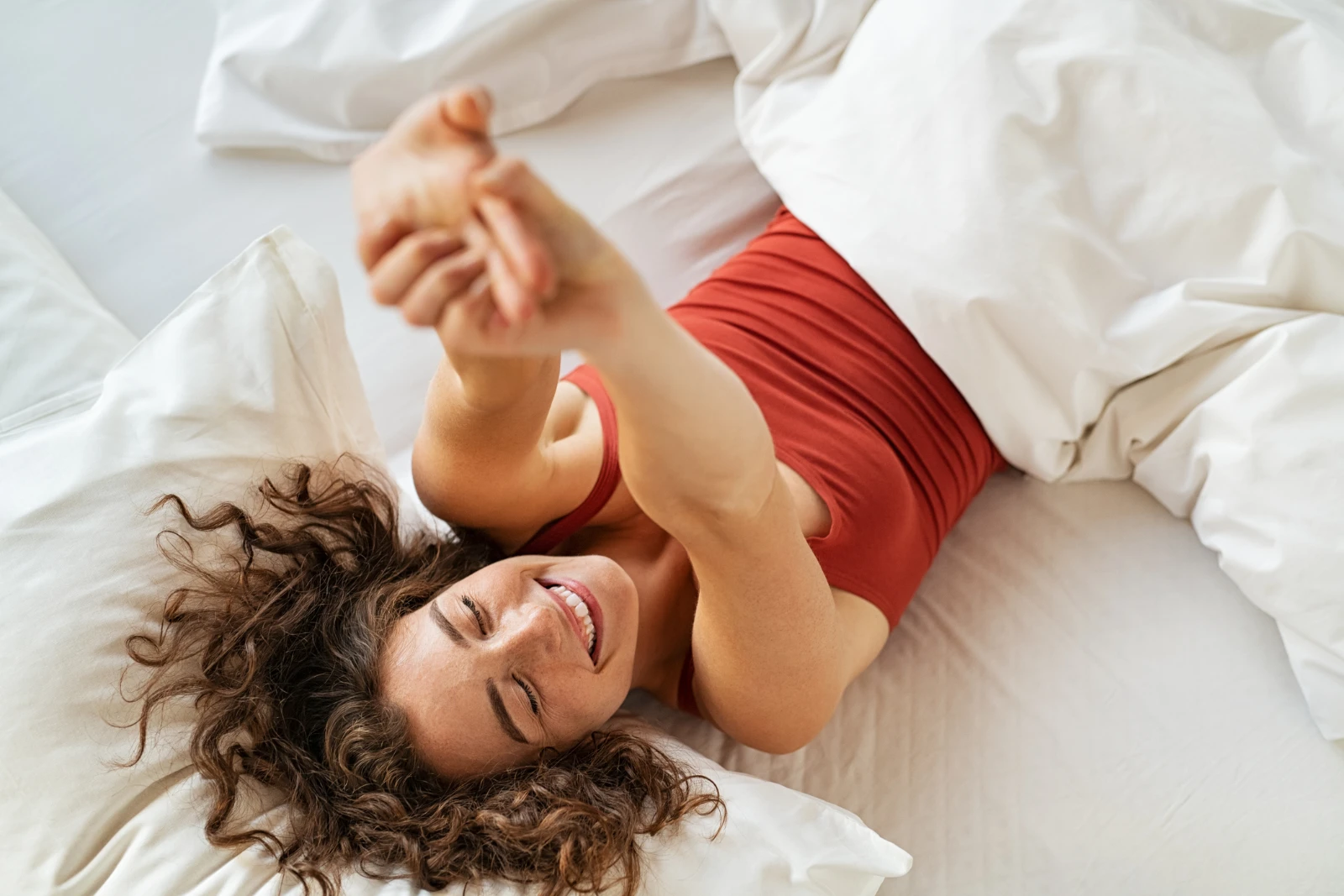
Partly, yes. Twin studies suggest genes explain about half of the difference between morning larks and night owls (Koskenvuo et al., 2007). The largest study so far, covering nearly 700,000 people, found 351 regions of DNA linked to being a morning person (Jones et al., 2019). Your genes set your natural leaning. Light, routine, age and the time on the clock then decide how well your day fits that leaning, which is why the clocks going back can hit some people harder than others.
Whether you're up with the sun or reaching for the snooze button, your genes have more say in it than you might think.
What happens when the clocks go back?
Last weekend the clocks went back an hour, ending British Summer Time. For most of us it meant an extra hour in bed, lighter mornings for a short while and much darker evenings.
Your body has its own internal clock, a roughly 24-hour cycle called your circadian rhythm. It stays in sync mainly by using daylight, especially morning light. When the clocks change, your social schedule moves by an hour but the sun doesn't, so your body has to catch up.
The good news is that the autumn change tends to be the easier one. A study that tracked sleep and activity in 50 people around each clock change found they adjusted fairly quickly when the clocks went back in autumn. In spring, when the clocks go forward, activity timing didn't adjust well, especially in natural night owls (Kantermann et al., 2007). The same research, using survey data from 55,000 people, found that our sleep follows the seasonal change in dawn under standard time, but not under summer time.
So if the past few days have felt a bit off, it's completely normal.
Why are some people morning people and others night owls?
Your "chronotype" is your natural preference for when you sleep and when you feel most alert. Morning types (larks) wake early and peak earlier in the day. Evening types (owls) feel their best later and struggle with early starts. Most people sit somewhere in between.
In a study of 8,753 adult twin pairs in Finland, genetic factors explained 49.7% of the differences in whether people were morning or evening types (Koskenvuo et al., 2007). The rest came from the environment and lifestyle.
Which genes affect whether you're a morning person?
There isn't a single "morning person gene". Being a morning or evening person is shaped by hundreds of small genetic differences that add up.
- An early UK Biobank study of 128,266 people found 16 variants linked to chronotype. These included variants near RGS16 (linked to 21% higher odds of being a morning person) and PER2 (9% higher odds), both known body clock genes (Jones et al., 2016).
- A larger study of 697,828 people from UK Biobank and 23andMe took this from 24 known regions to 351 (Jones et al., 2019). Many of these genes are active in the retina, the part of the eye that senses light, and in the hypothalamus, where your master body clock sits.
- The same study tracked the sleep of 85,760 people using activity trackers. The 5% of people carrying the most ‘morning’ variants fell asleep and woke up about 25 minutes earlier on average than the 5% carrying the fewest. In other words, their whole night’s sleep was shifted earlier.
Twenty-five minutes might not sound like much, but it is a shift in your whole biological day: when you feel sleepy, when you're most alert and when your body is best set up to train.
How does your DNA affect your sleep/wake cycle?
Your sleep/wake cycle is run by a loop of "clock genes" in almost every cell in your body. Genes such as CLOCK and BMAL1 switch on the PER and CRY genes. The PER and CRY proteins build up through the day and then switch off their own production. This cycle takes about 24 hours and controls when melatonin is released, when your body temperature dips and when you feel ready for sleep.
Small changes in these genes can make your internal day a little longer or shorter, or change how strongly your clock responds to light. That's partly why the chronotype genes found by Jones et al. (2019) were concentrated in the retina and in brain areas that handle light and hormones. Someone whose clock is less sensitive to morning light may find it harder to wake up on dark winter mornings, while someone with a strongly light-sensitive clock may reset quickly after the clocks change.
Being a morning person also seems to matter beyond sleep. Using a genetic method called Mendelian randomisation, researchers found that a natural tendency to wake one hour earlier was linked to a 23% lower risk of depression (Daghlas et al., 2021). Jones et al. (2019) also found that being a morning person was linked to better mental health.
Is your need for a daytime nap in your genes?
Yes, at least partly. A study of 452,633 people in UK Biobank found 123 regions of DNA linked to how often people nap during the day, and 61 of these were confirmed in more than 540,000 23andMe customers (Dashti et al., 2021).
Some of these variants were in genes for orexin receptors (HCRTR1 and HCRTR2). Orexin is a brain chemical that keeps you awake, and these receptors are already targets for some sleep medicines. HCRTR2 is also the gene behind the FitnessGenes Daytime napping and morningness trait. The researchers found that these genes seem to encourage napping in three different ways:
- Through a natural need for more sleep
- As a result of poor or disrupted night-time sleep
- Alongside an early sleep pattern (going to bed and waking up early)
Napping isn't all bad or all good. Frequent napping was linked to higher blood pressure and a larger waist size (Dashti et al., 2021). Another UK Biobank study found that a genetic tendency to nap was linked to a slightly larger total brain volume, with no effect on reaction time or memory (Paz et al., 2023). The type of nap, how long it lasts and why you need it all seem to matter.
After the clocks go back, the darker afternoons can make that mid-afternoon slump feel stronger. If you're genetically inclined to nap, a short nap (around 20 minutes) earlier in the afternoon is less likely to affect your night-time sleep than a long late one.
Can your genes make you more likely to get seasonal affective disorder?
Seasonal affective disorder (SAD) is a type of depression that follows a seasonal pattern, usually starting in autumn and easing in spring. Darker days after the clocks change are often when people first notice their mood, energy, appetite or sleep shifting.
Genes play a part here too:
- A study of 4,639 adult twins found that genes explained at least 29% of the variation in seasonal changes in mood and behaviour, including sleep, energy, appetite and weight (Madden et al., 1996). These changes mostly followed a winter pattern.
- One gene of interest is OPN4, which makes melanopsin, a light-sensing protein in the eye that tells your body clock it's daytime. People with two copies of a particular OPN4 variant (P10L) were 5.6 times more likely to be in the SAD group than in the control group (Roecklein et al., 2009). This was a small study, so it needs confirming in larger groups, but it suggests some people may need more light than others to feel normal in winter.
Having a genetic tendency towards seasonal low mood doesn't mean you'll develop SAD. If your mood drops in winter and stays low, speak to your GP. Light therapy, getting outside in the morning and talking therapies can all help.
Can you change whether you're a morning person?
You can't change your genes, but you can work with them. Your chronotype is a tendency, not a fixed timetable. Your clock responds to light, meal times, exercise and routine, and it naturally shifts later in your teens and earlier again as you get older.
A few things help most people, especially in the weeks after the clocks go back:
- Get light early. Morning daylight is the strongest signal for your body clock. Even 10 to 20 minutes outside on a cloudy UK morning can be beneficial.
- Dim the evenings. Bright screens and lighting late at night push your clock later, which matters most if you're already an owl.
- Keep your wake time steady. A regular wake-up time, including at weekends, keeps your clock stable more than a regular bedtime does.
- Time your training. Morning people may feel strongest in morning sessions, while evening people often perform better later in the day. If you can, plan harder sessions for when you naturally feel your best.
- Be strategic with naps. Keep them short and early in the afternoon.
What can a DNA test tell you about your body clock?
A DNA test can show which way your genes lean for morningness, your sleep/wake pattern, napping and seasonal mood. It can't tell you everything, because hundreds of genes and your lifestyle are all involved. What it can do is explain why you feel the way you do and help you plan your sleep, training and light exposure around your natural rhythm rather than fighting it.
The FitnessGenes DNA analysis includes three traits linked to your body clock: Daytime napping and morningness (HCRTR2), Sleep/wake cycle and Seasonal affective disorder.
Find out what your genes say about your sleep. Get your FitnessGenes DNA test.
FAQs
Is being a morning person genetic?
Partly. Twin studies suggest genes explain about half of the difference between morning and evening types (Koskenvuo et al., 2007), and more than 350 regions of DNA have been linked to morningness (Jones et al., 2019).
What is a chronotype?
Your chronotype is your natural preference for when you sleep and when you feel most alert. Morning types (larks) peak earlier in the day and evening types (owls) peak later.
Why do the clocks changing affect some people more than others?
Your body clock relies on daylight to stay in sync. When the clocks change, your schedule moves but daylight doesn't. Night owls tend to find the spring change, when the clocks go forward, harder to adjust to (Kantermann et al., 2007).
Is the autumn clock change easier than the spring one?
Usually, yes. Research suggests people adjust fairly quickly when the clocks go back in autumn, but struggle more when they go forward in spring (Kantermann et al., 2007).
Is daytime napping bad for you?
Not necessarily. Frequent napping has been linked to higher blood pressure and waist size (Dashti et al., 2021), but a genetic tendency to nap has also been linked to slightly larger brain volume (Paz et al., 2023). Short, early afternoon naps are the safest bet.
Is seasonal affective disorder genetic?
Genes play a part. Twin research suggests at least 29% of seasonal changes in mood and behaviour are down to genes (Madden et al., 1996), and variants in the light-sensing OPN4 gene have been linked to SAD (Roecklein et al., 2009). Lifestyle, light exposure and where you live matter too.
Are morning people less likely to get depressed?
Research suggests so. A genetic tendency to sleep one hour earlier was linked to a 23% lower risk of depression (Daghlas et al., 2021).
Can I train myself to become a morning person?
You can shift your rhythm with morning light, a steady wake time and dimmer evenings, but your genes set the starting point. Most people can move a little, not switch from owl to lark completely.
References
Daghlas I, Lane JM, Saxena R, Vetter C. (2021). Genetically proxied diurnal preference, sleep timing, and risk of major depressive disorder. JAMA Psychiatry, 78(8), 903-910. https://doi.org/10.1001/jamapsychiatry.2021.0959
Dashti HS, Daghlas I, Lane JM, et al. (2021). Genetic determinants of daytime napping and effects on cardiometabolic health. Nature Communications, 12(1), 900. https://doi.org/10.1038/s41467-020-20585-3
Jones SE, Tyrrell J, Wood AR, et al. (2016). Genome-wide association analyses in 128,266 individuals identifies new morningness and sleep duration loci. PLoS Genetics, 12(8), e1006125. https://doi.org/10.1371/journal.pgen.1006125
Jones SE, Lane JM, Wood AR, et al. (2019). Genome-wide association analyses of chronotype in 697,828 individuals provides insights into circadian rhythms. Nature Communications, 10(1), 343. https://doi.org/10.1038/s41467-018-08259-7
Kantermann T, Juda M, Merrow M, Roenneberg T. (2007). The human circadian clock's seasonal adjustment is disrupted by daylight saving time. Current Biology, 17(22), 1996-2000. https://doi.org/10.1016/j.cub.2007.10.025
Koskenvuo M, Hublin C, Partinen M, Heikkilä K, Kaprio J. (2007). Heritability of diurnal type: a nationwide study of 8753 adult twin pairs. Journal of Sleep Research, 16(2), 156-162. https://doi.org/10.1111/j.1365-2869.2007.00580.x
Madden PA, Heath AC, Rosenthal NE, Martin NG. (1996). Seasonal changes in mood and behavior: the role of genetic factors. Archives of General Psychiatry, 53(1), 47-55. https://doi.org/10.1001/archpsyc.1996.01830010049008
Paz V, Dashti HS, Garfield V. (2023). Is there an association between daytime napping, cognitive function, and brain volume? A Mendelian randomization study in the UK Biobank. Sleep Health, 9(5), 786-793. https://doi.org/10.1016/j.sleh.2023.05.002
Roecklein KA, Rohan KJ, Duncan WC, et al. (2009). A missense variant (P10L) of the melanopsin (OPN4) gene in seasonal affective disorder. Journal of Affective Disorders, 114(1-3), 279-285. https://doi.org/10.1016/j.jad.2008.08.005
All research findings above are drawn from articles indexed on PubMed.