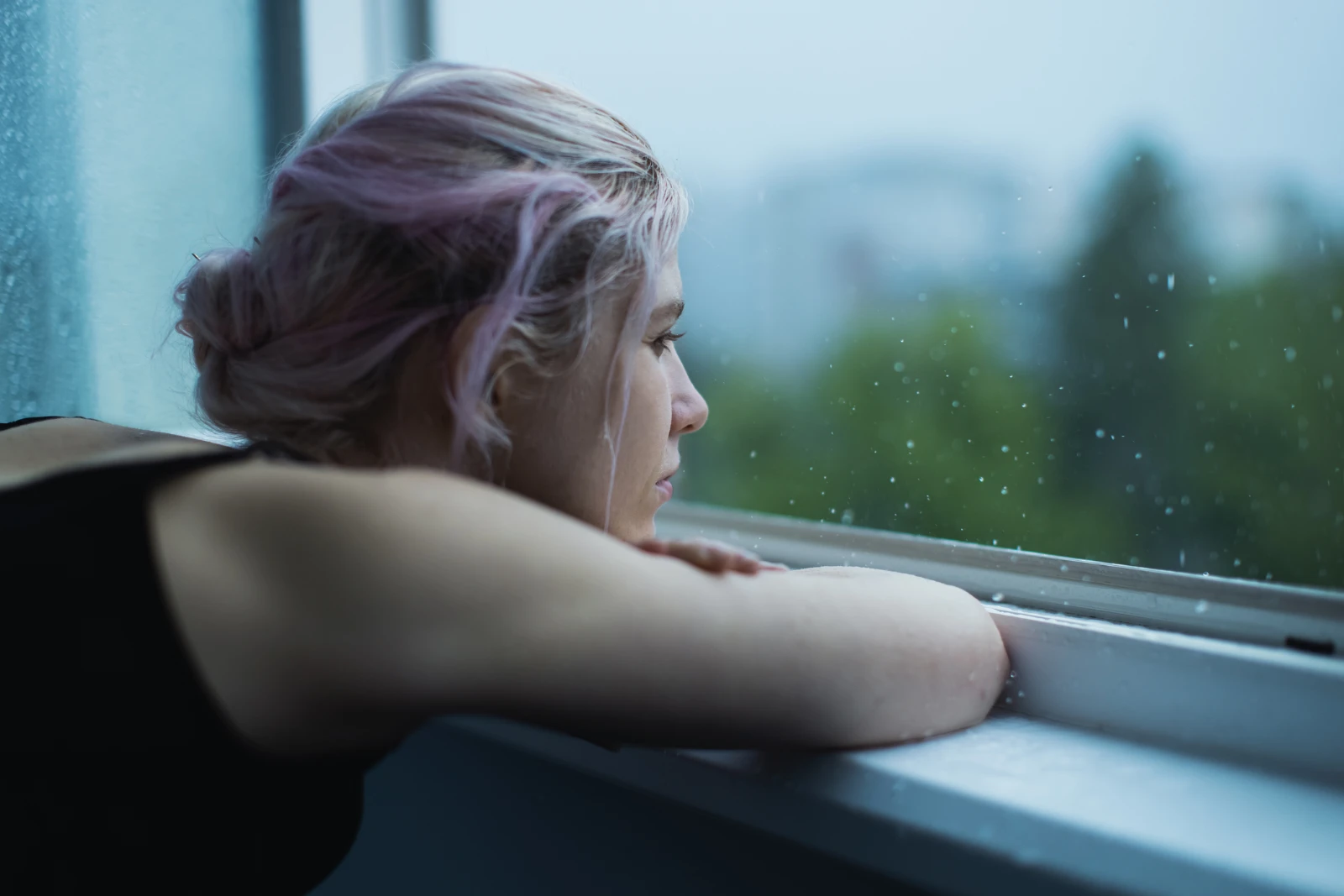
As the weather turns colder, does your motivation start slipping? You're not alone. By November the clocks have gone back, it's dark before you leave work, and the warm, light evenings that made training easy have gone. Activity drops and cravings rise, and "I'll start again in January" starts to sound very reasonable. Some of that slump is seasonal, but some of it is genetic. Your DNA influences how your body clock, mood and appetite respond to shorter days.
If you trained hard all summer and now find yourself skipping sessions, knowing why your motivation drops is the first step to keeping it going.
Why does your motivation slip as it gets colder?
Think about what changes between September and November. Training outdoors means running in the dark and the rain. The commute home happens at night, so the sofa feels like the end of the day before you've even thought about the gym. Social plans start filling up with festive drinks and meals out. None of these on its own is a reason to stop, but together they make every session take more effort.
Research backs this up. Physical activity levels rise and fall with the seasons, and bad weather is one of the most consistent barriers to exercise (Tucker & Gilliland, 2007). So if your routine feels harder right now, that isn't a character flaw. You're dealing with more obstacles than you were in summer.
The other problem is progress. When you're training less and eating a bit more, the results that kept you going start to stall. Once you stop seeing progress, it's much easier to talk yourself out of the next session.
Could shorter days be affecting your mood?
For many people, yes. Your circadian rhythm is your internal body clock. It uses daylight to keep your sleep, energy, appetite and mood on schedule. In winter you get less light, and you get it later in the morning, so for some people that clock drifts out of sync. The result can be feeling flat, sluggish, sleeping more and finding it harder to get going.
Most people notice some kind of seasonal dip. In one large population study, almost one in five people reported marked seasonal changes in mood, sleep, energy or appetite. Seasonal affective disorder (SAD), a form of depression with a seasonal pattern, was much less common, at around 2% (Zelinski et al., 2025). So feeling lower in winter is normal.
Your genes help explain why some people feel this more than others. SAD has been linked to variants in the genes that run your body clock. People with a particular combination of variants in three of these genes (PER2, ARNTL and NPAS2) had more than four times higher odds of SAD (Partonen et al., 2007). That doesn't mean they will develop it. It means their body clock may be more sensitive to the loss of daylight.
When I got my FitnessGenes results, one line stood out: my gene variants suggest I have an above-average risk of seasonal affective disorder due to altered circadian rhythms. It made a lot of sense. Every year, as the weather gets colder and the days get shorter, I notice a change in my mood, and it's harder than usual to motivate myself to go to netball training. Knowing there's a biological reason behind it doesn't make the evenings any lighter, but it does mean I can plan for it.
Is your motivation to exercise partly genetic?
Yes, more than most people expect. A large study of twins across seven countries, including the UK, found that genetics explained around half or more of the differences in whether people exercise regularly (Stubbe et al., 2006). One likely reason is how exercise makes you feel. Some people get a big mood boost from a workout, while others feel much less.
This matters in winter. If you don't get much of a buzz from training, and your mood is already dipping with the daylight, there's very little pulling you out of the door on a cold, dark evening. That's not a lack of willpower. It's a sign that you need a different strategy.
People who keep going through winter tend to rely less on motivation and more on structure. They have a team that expects them, a class they've paid for, a friend waiting at the gym, or a session booked in their diary like a meeting. If you know you're not naturally driven to exercise, these commitments do the work that motivation can't.
Why do cravings get worse as the weather turns cold?
You're not imagining it. Many people feel hungrier in winter and are drawn to heavier, carb-rich comfort food. Some of that is habit and environment: colder evenings, more time indoors, and a steady supply of festive food. Some of it is biology.
The same body clock that affects your mood also helps regulate your appetite through the year. Variants in one of its genes, NPAS2, have been linked to bigger seasonal swings in appetite and weight (Kovanen et al., 2010). If you carry these variants, you may notice your appetite rising noticeably from November onwards, even if your routine hasn't changed.
Your brain's reward system also plays a part. Dopamine is the chemical behind that feeling of reward when you eat something you enjoy, and the DRD2 gene codes for one of its main receptors. People with a common DRD2 variant have fewer of these receptors and may get a weaker reward from food. Some research suggests this can lead to eating more to get the same satisfaction (Stice et al., 2008). The evidence is still developing, so treat it as a tendency rather than a rule. Even so, it can help explain why the biscuit tin is harder to ignore for some people than others.
Put a body clock that turns up your winter appetite together with a reward system that leans towards impulsive eating, then add Christmas parties and a fridge full of leftovers, and November becomes a perfect storm. Once your eating slips, it's easy to decide the whole month is a write-off, and that's often when training goes too.
Why wait until 1 January to start again?
For many people, November is when they mentally hand everything over to their "new year self". It feels like a clean slate: a fresh calendar, no more parties, and a natural moment to start again. It's no surprise that physical health, weight loss and eating habits are the most popular New Year's resolutions (Oscarsson et al., 2020).
The problem is the stop-start cycle. You stop in November, restart in January with an ambitious plan, and by mid-January the motivation is fading again. Strava's activity data even points to a "Quitter's Day" on the second Friday of January (Coach, 2019). The habit you dropped in November becomes the resolution you drop again in January.
How you frame your goals helps break that cycle. The same resolutions study found that goals focused on doing something positive ("eat more vegetables") were more successful than goals focused on avoiding something ("stop eating sweets"). You don't need a new year to set a better goal. You can start now.
How can you keep your motivation going through November?
- Get daylight when you can. Your body clock relies on light. A walk outside in the morning or at lunchtime helps, and training in daylight at weekends gives you a double benefit.
- Replace motivation with commitment. Join a team, book a class in advance, or arrange to train with a friend. On the days you don't feel like going, the commitment gets you there.
- Make it easier to start. Pack your kit the night before, train straight from work before you get home to the sofa, or set up a short home workout for the evenings you really can't face going out.
- Plan for cravings rather than fighting them. If you know your appetite rises in winter, build regular, filling meals with plenty of protein and fibre, and keep tempting snacks out of easy reach. That's more realistic than relying on willpower at the buffet.
- Follow the winter vitamin D guidance. UK advice is that everyone should consider a daily 10 microgram vitamin D supplement from October to March, when sunlight is too weak for your skin to make enough (NHS, 2024).
- Set a positive goal now. "Go to training every week through December" works better than "don't let myself go until January".
- Aim for less, not zero. Two workouts a week in November beats doing nothing and starting from scratch in January.
How can FitnessGenes help you stay motivated through winter?
Your FitnessGenes DNA test includes reports that explain your winter slump:
- Seasonal affective disorder: whether your circadian rhythm genes put you at higher risk of mood changes as the days get shorter.
- Seasonal variation in appetite (NPAS2): whether you're likely to feel hungrier in the colder months.
- Dopamine and impulsive eating (DRD2): how your reward system may affect your response to food, and how likely you are to eat on impulse.
Knowing your tendencies means you can plan for November rather than being caught out by it, so you don't need to start from zero on 1 January.
Get your FitnessGenes DNA test here.
FAQs
Why do I lose motivation to exercise when it gets colder?
It's usually several things at once. Shorter days can affect your body clock and mood, bad weather makes training harder, appetite tends to rise, and party season disrupts routines. Your genetics influence how strongly each of these affects you.
What's the difference between the winter blues and seasonal affective disorder?
Feeling a bit flatter, more tired or hungrier in winter is common. SAD is a clinical form of depression that follows a seasonal pattern and affects daily life.
Can my genes make me more likely to get SAD?
Your genes can raise your risk, but they don't decide whether you'll get SAD. Variants in body clock genes such as PER2, ARNTL and NPAS2 have been linked to a higher risk. Light, routine and support all make a difference.
Is exercise motivation really genetic?
Partly. Twin studies suggest genetics explain around half of the differences in whether people exercise regularly. Your genes shape your tendencies, but habits and planning still make the biggest difference day to day.
Why do I crave comfort food when it gets cold?
It's a mix of habit, environment and biology. Variants in NPAS2 have been linked to bigger seasonal swings in appetite, and DRD2 variants may affect how rewarding you find food.
Should I take vitamin D in winter?
UK government advice is that everyone should consider a daily 10 microgram (400 IU) vitamin D supplement from October to March. If you have a medical condition or are considering a higher dose, speak to a healthcare professional first.
Is it better to wait until January to restart my routine?
Not usually. Weight gained over the festive period tends to stay on, and restarting from scratch is harder than keeping a smaller routine going. A lighter but consistent plan through November and December keeps your momentum.
References
Coach. (2019). Strava data suggests today is the day you'll break your New Year's resolution. https://coachweb.com/fitness/7201/strava-data-suggests-today-is-the-day-you-ll-break-your-new-year-s-resolution
Kovanen L, Saarikoski ST, Aromaa A, Lönnqvist J, Partonen T. (2010). ARNTL (BMAL1) and NPAS2 gene variants contribute to fertility and seasonality. PLoS One, 5(4), e10007. https://doi.org/10.1371/journal.pone.0010007
NHS. (n.d.). Seasonal affective disorder (SAD). https://www.nhs.uk/mental-health/conditions/seasonal-affective-disorder-sad/overview/
NHS. (2024). Vitamin D. https://www.nhs.uk/conditions/vitamins-and-minerals/vitamin-d/
Oscarsson M, Carlbring P, Andersson G, Rozental A. (2020). A large-scale experiment on New Year's resolutions: approach-oriented goals are more successful than avoidance-oriented goals. PLoS One, 15(12), e0234097. https://doi.org/10.1371/journal.pone.0234097
Partonen T, Treutlein J, Alpman A, et al. (2007). Three circadian clock genes Per2, Arntl, and Npas2 contribute to winter depression. Annals of Medicine, 39(3), 229–238. https://doi.org/10.1080/07853890701278795
Stice E, Spoor S, Bohon C, Small DM. (2008). Relation between obesity and blunted striatal response to food is moderated by TaqIA A1 allele. Science, 322(5900), 449–452. https://doi.org/10.1126/science.1161550
Stubbe JH, Boomsma DI, Vink JM, et al. (2006). Genetic influences on exercise participation in 37,051 twin pairs from seven countries. PLoS One, 1(1), e22. https://doi.org/10.1371/journal.pone.0000022
Tucker P, Gilliland J. (2007). The effect of season and weather on physical activity: a systematic review. Public Health, 121(12), 909–922. https://doi.org/10.1016/j.puhe.2007.04.009
Yanovski JA, Yanovski SZ, Sovik KN, et al. (2000). A prospective study of holiday weight gain. New England Journal of Medicine, 342(12), 861–867. https://doi.org/10.1056/NEJM200003233421206
Zelinski L, Pálmadóttir AD, Birgisdóttir ÁG, et al. (2025). Prevalence of seasonal affective disorder and seasonality of mood and behaviour in Iceland: methodological implications for revisiting the latitude hypothesis. Journal of Affective Disorders, 398, 121057. https://doi.org/10.1016/j.jad.2025.121057